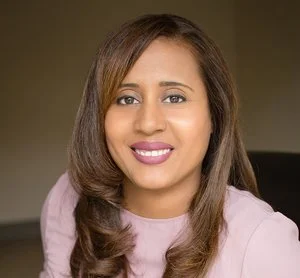
On this episode of the Simplify to Thrive podcast, I talked with business strategist Deborah Smith, who helps women solopreneurs, market and sell their offers. We covered why long-form evergreen content outperforms chasing social media, how to choose a content format you can stick with, how to stand out in a feed full of AI-written content, and how to build a personal brand message people remember.
Listen to the Audio Podcast Here:
Watch Video:
Who is Deborah Smith?
Deborah Smith is a business strategist who works with women solopreneurs, many of them in the wellness industry. She describes her clients as "the helpers and the healers": health coaches, fitness coaches, meal-planning experts, yoga teachers, energy healers and other service providers whose results are real but hard to package.
Her work covers offer creation, marketing, messaging, sales and sales strategy, with a focus on simple technology and clear messaging so potential clients understand the offer right away.
Her background includes:
A marketing degree and 5–10 years in marketing, fundraising and event production for large arts and education organizations
Certification as a health coach
15 years as co-founder and marketing and sales director of a plant-based wellness company that ran group coaching programs, digital products, catering, pop-up juice bars, a juice bar and a food truck
Mentoring women in wellness businesses since 2016
Hosting the Mindset to Market podcast and the free Soul Aligned Sales Studio community
Why is it hard to market a wellness or service-based business?
Intangible results are harder to sell than physical products. Deborah learned this firsthand while running marketing for her wellness company: it's easier to sell a sneaker than to sell "feel better in your body" or "wake up with clear, focused energy."
The fix is packaging. Service providers need to turn their work into an offer that potential clients can see themselves in, then describe it in messaging clear enough that someone immediately understands what it is, who it's for and how to buy it.
What is the most sustainable marketing strategy for solo service providers?
The most sustainable marketing strategy for a solopreneur is a long-form, evergreen content library supported by social media, not built on it.
Deborah doesn't dismiss social media. It's a powerful way to get attention. The problem is that it moves fast, posts lose relevance within a day, and keeping up leads to burnout. If your business needs to pay your bills and support the lifestyle you want, you need marketing that keeps working.
Her recommended approach:
Get clear on your foundation: what you do, who you serve, and the sweet spot where your joy meets market demand.
Build a core message from that foundation and your lived experience.
Publish long-form content in a format with staying power, such as a blog, podcast or YouTube channel.
Use social media as a pointer back to that body of work, so someone who finds you a year from now still gets value.
How do you choose the right content format for your business?
Start with the format that feels natural to you. Deborah has clients who love writing but refuse to appear on camera, and others who livestream everything but dislike typing. Neither is wrong. The right format is the one you'll keep creating.
She shared her own example. She ran a YouTube channel for a year and enjoyed it, but filming and editing took time she wanted for exercise, cooking her meals and getting outside. Podcasting fit into her life without crowding out those priorities, so she let YouTube go.
Her three questions for choosing a format:
What can I honestly create over and over again?
Who are the people I'm best suited to help? The content is for them, not for you.
Where do those people spend time, and how do they like to receive information?
How do you create evergreen content?
Evergreen content stays true and useful months or years after you publish it. Deborah's process:
Research your niche. Listen to other podcasts, watch other channels and read the books in your space so you know what's already out there.
Find the universal truths. Look for the ideas repeated across experts. In marketing, for example, nearly everyone agrees you need offer clarity and a clear, magnetic message.
Add your lived experience. Teach those truths through your own stories. Deborah explains offer clarity using her days selling green juice on the streets of Brooklyn, testing ways to get people to take a sample and then buy.
Run the one-year test. Ask: will this be true a year from now? Will it help someone solve their problem? Avoid tying content to dates or events that will quickly become irrelevant.
How do you stand out from AI-generated content?
She sees AI as a strong tool for executive function, the planning side of running a business. For example: "I have three hours and need to finish these tasks. Help me prioritize." But for creative work, AI pulls from the whole internet and returns average answers, which dulls your ideas and makes you sound like everyone else. Readers can tell, in posts, blogs and emails.
She admits she used ChatGPT to help write when it first launched, then stopped once she noticed it made her sound generic. To build trust, she says, you have to write your own sentences and tell your own stories.
Build a "special sauce" story bank
Deborah helps clients collect the stories from their lives that explain who they are and why they do their work. Her example: a seventh grader tripped at the bus stop who gets up and stands up for herself, and who draws on that memory years later when someone attacks her online. That's a resilience story, and it may connect directly to how she coaches clients.
People want stories with a beginning, middle and end. They want to know how you got from where you were to where you are now. As Deborah puts it, "AI did not live your life."
Test your content from your ideal client's point of view
"We don't buy things. We buy feelings," Deborah says. People buy a car for safety or status, and they hire a coach for an identity shift or a sense of security. Read your content as your ideal client would. If it sounds like AI wrote it, your client will notice too.
How do you build a personal brand message?
Deborah separates personal branding into two parts:
Visual branding (colors, fonts, logos): she recommends hiring a brand designer or strategist trained in design and color psychology.
Brand messaging: the statement people remember you by. This is where she works with clients.
A strong brand message sits in a sweet spot where your offer:
has market value and solves a problem people will pay for
draws on your lived experience
brings you joy to deliver, not just something you're good at
Once it's clear, put it where people see it first: above the fold on your website homepage and in every social media bio (Instagram, LinkedIn, Facebook, TikTok). Most people won't read past the first two lines, so keep the message identical across platforms. Deborah's own positioning is consistent everywhere: she's known for offer creation and business development.
Frequently asked questions
What is evergreen content? Evergreen content is content that stays accurate and useful long after it's published, such as a podcast episode, blog post or YouTube video that teaches a core principle instead of reacting to a trend or date.
Is social media enough to market a service business? Social media builds awareness quickly, but posts lose relevance fast. Deborah Smith recommends pairing it with a long-form content library, like a podcast or blog, that clients can find and use for years.
What is the best content format for a solopreneur? The best format is the one you enjoy and can sustain: writing, video or audio. Then choose based on where your ideal clients spend time and how they prefer to learn.
Should I use AI to write my marketing content? Deborah Smith advises against it. Use AI to plan, organize and prioritize your work, but write your content yourself so it reflects your voice and stories and builds trust.
What is a story bank? A story bank is a collection of personal stories from your life that you can draw on in emails, blog posts and podcast episodes to illustrate your expertise and make your content distinctly yours.
Where should my personal brand message appear? Above the fold on your website homepage and in the bio of every social platform you use, worded consistently so people remember who you help and how.
Connect with Deborah
Website: https://www.deborahcsmith.com/
Instagram: https://www.instagram.com/_deborahcsmith/